For a long time, I think I misunderstood the work machine I was trying to operate.
I treated myself like an air purifier: something designed to run quietly in the background all day, every day. Something that hums along continuously, doing useful work by simply staying on. There are people, or at least systems, that seem designed for that kind of output: steady, diffuse, constant, reliable.
But I do not think I am an air purifier.
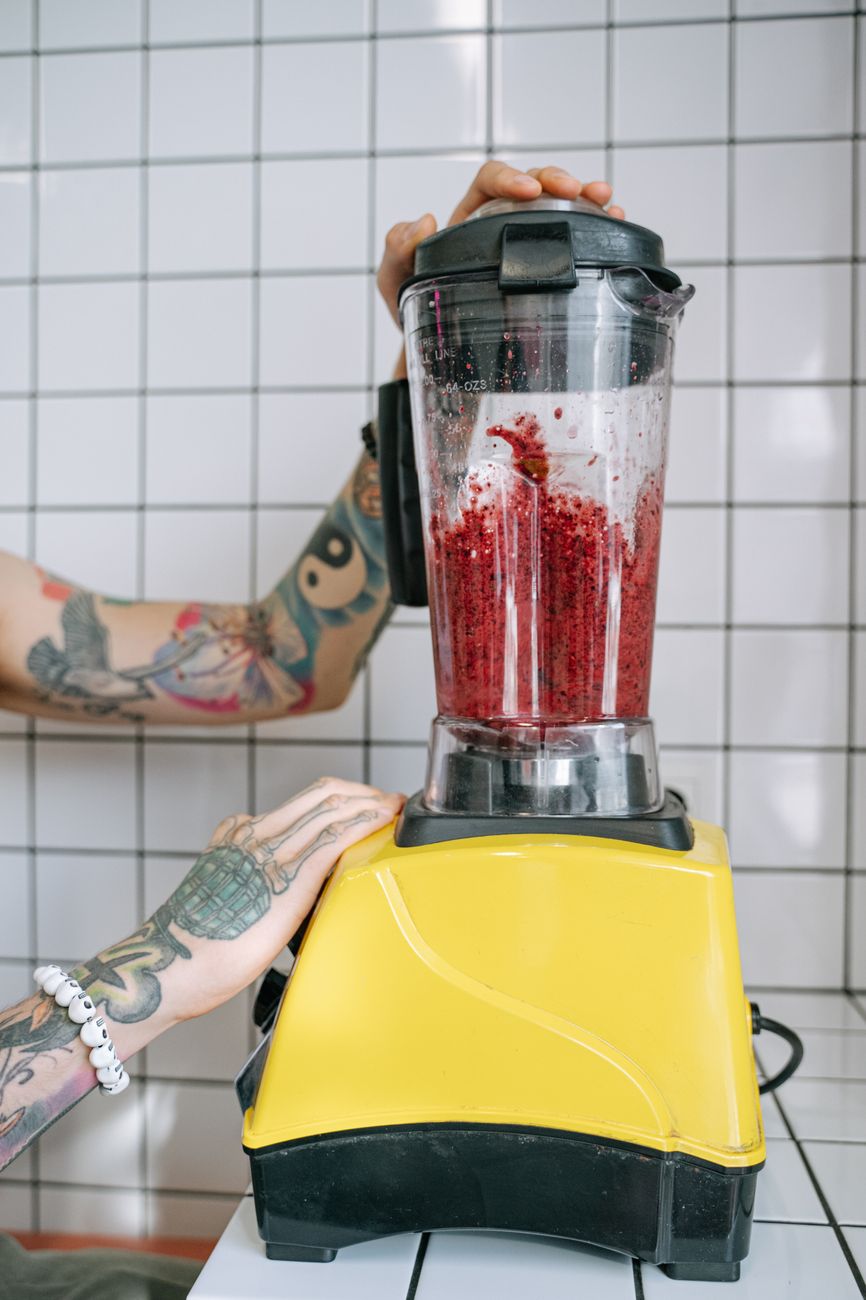
I think I am more like a blender.
A blender can do powerful work. It can transform things. It can take separate ingredients and make something new. It can turn fruit, ice, yogurt, greens, liquid, and powder into something drinkable. It can do work that an air purifier absolutely cannot do.
But a blender has rules.
You cannot run it all day.
You cannot put silverware in it.
You cannot fill it only with frozen pineapple and no liquid and expect that to go well.
And when you are done using the blender, you have to turn it off.
Continuous Pressure Is Not Continuous Productivity
One of the injuries I carried from law practice, and to some extent from school, is the belief that any hour I am awake could be a work hour.
If I am awake, I could be answering email. I could be drafting something. I could be doing homework. I could be reviewing discovery. I could be billing. I could be studying. I could be cleaning. I could be getting healthier. I could be catching up. I could be better.
The result is that the blender turns on first thing in the morning, sometimes as soon as I look at my email, and then it stays on all day.
Sometimes there is something in the pitcher. Sometimes there is not. Sometimes I throw a task in and process it. Sometimes the blender is just running empty, making noise, heating up, and convincing me that because the motor is on, I must be doing something useful.
But continuous self-pressure is not the same as continuous productivity.
A blender that runs all day does not necessarily make more smoothies. It just overheats. Whatever is in there gets warm and strange. The motor wears down. The whole kitchen starts to smell faintly electrical.
This has become one of the most important distinctions in my life: the question is not, “How long can I keep the blender running?”
The better question is, “How many good smoothies can this blender make today without burning out the motor?”
Not Everything Belongs in the Blender
At first, I thought the metaphor was simply about chunking tasks. A blender can handle fruit if you cut it into manageable pieces. A big task, like a pineapple, may be possible if you cut it down.
That part is true. Many things in life are pineapples: large, spiky, awkward, but ultimately manageable. A legal filing. A credentialing application. A house project. A piece of writing. A difficult email. A course of study. These things may require preparation, support, and smaller pieces, but they are not impossible.
But then I realized something more important: some things are not pineapples.
Some things are silverware.
No amount of chunking makes silverware appropriate for a blender. You cannot “one bite at a time” a fork. You cannot break a spoon into smaller steps and call it a smoothie ingredient. If something does not belong in the blender, the answer is not to try harder, organize better, or improve your attitude. The answer is to stop putting metal in the machine.
This matters because so much productivity advice assumes that all resistance is a chunking problem. “How do you eat an elephant? One bite at a time.”
But there are some things we cannot eat. We do not have the teeth. Or the stomach. Or the ethical framework. Or the freezer space. Or the desire.
Some work is not merely hard. Some work requires us to become a kind of machine we are not.
Pineapple, Frozen Pineapple, and Silverware
This metaphor helped me develop a more useful taxonomy than “easy” and “hard.”
Some tasks are soft fruit. They are easy enough when I have capacity: send the text, print the document, water the plants, make the call.
Some tasks are pineapple. They are hard but possible: draft the agreement, study for the exam, clean a room, prepare for a hearing.
Some tasks are frozen pineapple. They are technically possible, but rough on the motor: emotionally loaded emails, high-stakes legal work, complicated financial tasks, administrative systems with hidden rules, work that requires precision when I am depleted.
And some tasks are silverware. They do not belong in my machine.
For me, examples of silverware have included certain kinds of legal employment: jobs with impossible workloads, billable-hour pressure, little support, no camaraderie, high professional responsibility, and no meaningful relationship to the work beyond producing more output. Those jobs did not simply challenge me. They damaged my capacity to work at all.
This distinction has helped me understand my own work history with more compassion and accuracy.
I have had jobs that were obviously toxic. In those environments, the silverware was visible. The workplace was defective in dramatic, undeniable ways. Eventually, the blender jammed, and I knew I had to get out.
But I have also had jobs that looked much more respectable from the outside and did more damage. No obvious fork. No spectacular chaos. Just too much frozen pineapple, day after day, with no liquid and no support. The motor did not jam. It burned out.
Those are different injuries. They require different repairs.
The Role of Liquid
A blender needs liquid.
This sounds obvious, but it may be the most important part of the metaphor.
There are kinds of work that are difficult but come with liquid. For me, therapy has liquid. My affection for clients is liquid. The fun of listening to them is liquid. Curiosity is liquid. The relational field is liquid. The strange, moving, specific details of another human life are liquid.
Therapy sessions are not smoothies in the sense of forcefully grinding hard chunks into submission. They are more like blending juices, steeping tea, making broth, mixing colors. Something alive happens in the exchange. There is motion, but it is not dry.
That does not mean therapy is easy. Notes, billing, scheduling, boundaries, crisis planning, and clinical responsibility can all be chunks. Some of them are pineapple. Occasionally, some are frozen pineapple. But if the work is suspended in enough liquid, the motor can move.
Some legal work also has liquid. A client I genuinely enjoy and respect can be liquid. A field visit can be liquid. A case involving real human contact, curiosity, and purpose can be liquid.
But other work has almost none. Procedural landmines, hidden expectations, unclear training, court deadlines, boring documents, professional risk, and scolding after the fact can make a very dry pitcher.
Even if that work is not silverware, a steady diet of frozen pineapple with no liquid is still bad blender care.
Play Does Not Belong on the Work List
Another discovery startled me: I had started putting exercise, art, aerial training, and other forms of aliveness into my planner so that I would protect time for them. That seemed sensible. In a busy life, if something matters, you make space for it.
But once these things entered the planner, they became blender fodder.
Art became a task. Aerials became a task. Exercise became a task. Meditation became a task. Self-care became another way to monitor whether I was doing life correctly.
That is not always wrong. Protecting self-care by making it an appointment can make it more likely to happen. A class with a friend, a training session, or a scheduled walk can be a way of protecting what matters.
But not everything that matters belongs on the work list.
Some activities are supposed to happen with the blender off.
I have memories of making things for no reason: writing short stories, researching labyrinths, climbing trees, making strange little craft projects with tissue paper and glue, writing essays on witchcraft because the subject called to me. These were productive in a sense, but they did not come from the productivity machine. They came from a blank page after the to-do list. They came from being off duty and asking, “What do I want to do now?”
The answer was not always “rest” in the conventional sense. Sometimes it was making, wandering, climbing, gluing, researching, inventing.
That kind of activity is not work. It is self-generated aliveness.
If play goes on the work list, it may stop being play.
Numbing Is Not the Same as Being Off
When the blender has been running all day, I often want high-dopamine distraction at night: television, iPad games, podcasts, audiobooks, sometimes all stacked together. None of these things are bad. They can be soothing. They can be pleasurable. They can help with transition.
But there is a difference between rest and drowning out the noise of a motor that is still running.
When I am truly off duty, I have access to a different kind of time. It is quieter. More spacious. More likely to lead to art, movement, wandering, or real rest.
When I am not off duty, I need stronger and stronger inputs to distract myself from the fact that some part of me still believes I should be working.
That is not a failure of discipline. It is a failure of shutdown.
The Blender Needs an Off Switch
The most practical insight from this metaphor is also the simplest: I need to stop leaving the blender on all day.
That means I need boundaries around email. I need work blocks with beginnings and endings. I need a place to write down unfinished tasks so they do not have to rattle around in my head. I need shutdown rituals. I need to remember that rest is not unbilled availability.
A work block can be a work block. It can have a clear task, enough liquid, and a planned shutoff.
Then the blender turns off.
Not because everything is done. Everything is never done. The legal work, the house, the laundry, the plants, the bills, the professional obligations, the health goals, the creative dreams, the unread messages: they will not all be done.
The blender still has to turn off.
Protecting the Blender Is Not Indulgent
This metaphor has helped me understand burnout differently. When the blender breaks, the repair is not always quick. Sometimes there is an indefinite rest period. Sometimes there is specialty repair work. Sometimes the repair is so deep that it changes your profession, your identity, and your understanding of what kind of life you can safely build.
If the blender is how you make money, it is dangerous to be reckless with it.
Protecting capacity is not laziness. It is not softness. It is not refusal to grow. It is asset management. It is survival. It is also a kind of justice after years of systems that benefited from treating my overfunctioning as an endlessly renewable resource.
I do not want to stop making smoothies.
I want to make fresh ones.
I want to know what belongs in the pitcher and what does not. I want to cut the pineapple before blending it. I want to add liquid. I want to pulse instead of running the motor continuously. I want to stop when the machine smells hot.
And when I am done working, I want to turn the blender off and go live the parts of my life that were never supposed to be blended in the first place. I think many of us need this.


Leave a Reply